

In today's competitive digital landscape, mastering E-commerce SEO is no longer optional – it's essential for survival. With countless online stores vying for attention, ensuring your products are easily discoverable by potential customers is paramount. Imagine launching a flagship store on Fifth Avenue, only to find that no one can find the entrance. That's the reality for many e-commerce businesses that neglect search engine optimisation.
This article serves as your comprehensive guide to navigating the complexities of it. We'll break down the fundamental principles, explore effective keyword research strategies, delve into on-page and technical optimisation techniques, and uncover off-page strategies to boost your store's authority. By the end of this guide, you'll have the knowledge and tools to significantly improve your online visibility, attract more qualified traffic, and ultimately, drive more sales. Let Airticles guide you in mastering your content and optimising it for success.
Overview
Understanding the Fundamentals of E-commerce SEO
Diving into the world of online retail requires a solid understanding of E-commerce SEO. This understanding forms the backbone of how potential customers discover your products amidst a sea of competitors. It's not just about having a visually appealing website; rather, it’s about ensuring that your online store is easily found by those actively searching for what you offer. Ignoring this crucial aspect is akin to opening a physical store in a remote location with no signage.
At its core, the process involves optimising various elements of your online store to rank higher in search engine results pages (SERPs). Search engines like Google use complex algorithms to determine which websites are most relevant and authoritative for a given search query. By strategically implementing best practices, you can significantly improve your visibility and attract more organic traffic. This involves everything from keyword research to technical audits.
Several key components are essential for success. These include:
Keyword Research: Identifying the terms your target audience uses to find products like yours.
On-Page Optimisation: Refining your product descriptions, titles, and meta tags to include relevant keywords.
Technical Audit: Ensuring your website is crawlable and indexable by search engines.
Link Building: Acquiring high-quality backlinks from reputable websites to boost your site's authority.
Content Marketing: Creating valuable and engaging content that attracts and retains customers.
Think of it as a comprehensive strategy that aligns your online store with the search engine's criteria. This alignment increases the likelihood of your products appearing prominently in search results. Moreover, platforms like Airticles can significantly aid in crafting optimised content, streamlining the process and ensuring high-quality output. Ultimately, a strong foundation in these principles is crucial for any online retailer aiming to thrive in today's competitive digital landscape. Indeed, it is about making sure Google understands what you are selling and to whom.
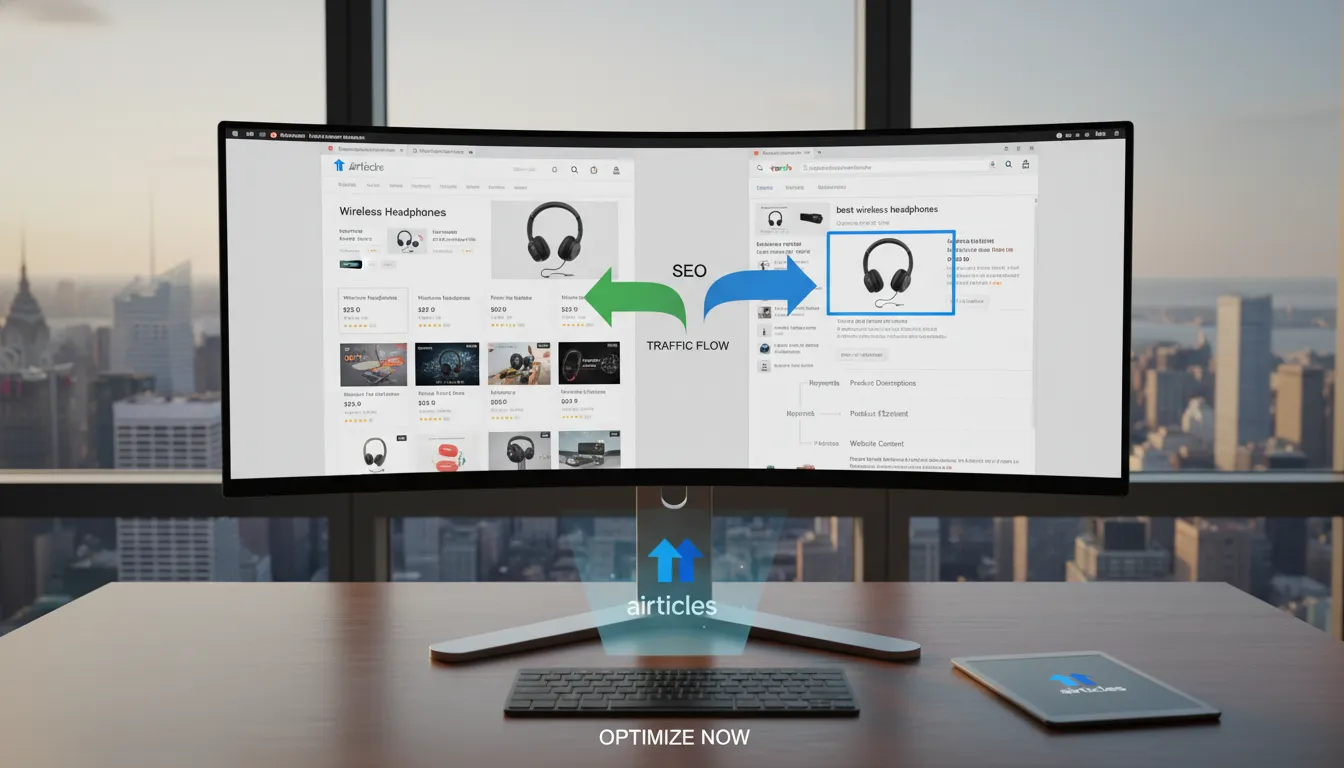
Keyword Research for E-commerce: Targeting High-Value Terms
Effective keyword research is the cornerstone of any successful e-commerce SEO strategy. Specifically, it involves identifying the terms and phrases that potential customers use when searching for products online. By targeting high-value keywords, businesses can attract qualified traffic to their online stores, increase conversions, and ultimately drive revenue. This process is not a one-time task but an ongoing effort that requires continuous monitoring and refinement to adapt to changing market trends and customer behaviour. Correspondingly, the goal is to understand the language of your target audience and align your website content accordingly.
To begin, brainstorm a list of seed keywords related to your products or services. These are broad, general terms that form the foundation of your keyword research. For example, if you sell handmade jewellery, your seed keywords might include "handmade jewellery", "artisanal necklaces", or "unique earrings". Once you have your seed keywords, use keyword research tools like Google Keyword Planner, Ahrefs, or SEMrush to expand your list and uncover more specific, long-tail keywords. Long-tail keywords are longer, more descriptive phrases that often have lower search volume but higher conversion rates. Besides, consider using Airticles to help streamline content creation around these keywords.
When evaluating keywords, focus on metrics such as search volume, competition, and relevance. Search volume indicates how many people are searching for a particular keyword each month. Competition refers to the difficulty of ranking for that keyword. Relevance measures how closely the keyword aligns with your products or services. Prioritise keywords that have a balance of reasonable search volume, manageable competition, and high relevance to your business. As a result, this ensures that you are targeting terms that are both popular and likely to attract customers who are genuinely interested in what you offer.
Consider these strategies for finding high-value keywords:
Analyse competitor keywords: Identify the keywords that your competitors are ranking for.
Use product-specific keywords: Target keywords that include specific product names or models.
Incorporate customer intent: Focus on keywords that reflect the intent of the searcher (e.g., "buy", "best", "review").
Explore seasonal trends: Identify keywords that are popular during specific times of the year.
Leverage question keywords: Target keywords that are phrased as questions (e.g., "how to", "what is").
Given these points, e-commerce businesses can effectively target high-value keywords and improve their online visibility.
On-Page Optimisation: Enhancing Product and Category Pages
On-page optimisation is crucial for improving the visibility of your product and category pages. The practice involves refining elements directly within your website to make it more appealing to both search engines and potential customers. By focusing on key areas, you can significantly enhance your store's ranking and drive more organic traffic. As such, this process ensures that your pages are not only easily discoverable but also provide a compelling user experience that encourages conversions.
Start by optimising your product titles and descriptions. Use relevant keywords naturally and create compelling, informative content that highlights the unique benefits of each product. High-quality, original descriptions are essential; avoid simply copying manufacturer-provided text. Ensure your product images are high-resolution and include descriptive alt tags. In doing so, this helps search engines understand the content of the images and improves accessibility for users.
Category pages also require careful optimisation. Craft unique and keyword-rich descriptions for each category to help search engines understand the page's focus. Implement a clear and logical site structure, making it easy for visitors to navigate your store. Utilise breadcrumbs to improve navigation and provide context for users. A well-structured site not only enhances the user experience but also helps search engines crawl and index your pages more effectively. Airticles recommends a regular checkup on internal linking strategy to ensure optimal flow.
Here are some key on-page optimisation elements to consider:
Keyword-rich product titles and descriptions
High-quality product images with alt tags
Unique category page descriptions
Clear and logical site structure
Optimised URLs
Internal linking strategy
Finally, pay attention to page load speed and mobile-friendliness. A fast-loading, mobile-optimised site provides a better user experience and is favoured by search engines. Use tools like Google's PageSpeed Insights to identify areas for improvement. Addressing these areas will significantly boost your site’s overall performance. Certainly, this analysis helps to ensure that your site meets the standards required for high rankings.
Technical SEO for E-commerce: Ensuring a Smooth Shopping Experience
Technical SEO is the backbone of any successful e-commerce website. Chiefly, it ensures that search engines can easily crawl, index, and understand your site. Without a solid technical foundation, even the most compelling product descriptions and beautiful designs will struggle to rank well. Envision it as the behind-the-scenes work that makes everything else possible, creating a seamless experience for both search engines and your customers. Getting it right is paramount to online success.
One crucial aspect is site speed. Customers expect fast loading times, and search engines prioritise websites that deliver a smooth user experience. Optimise images, leverage browser caching, and consider using a Content Delivery Network (CDN) to improve loading speeds. Mobile-friendliness is another key element. With a significant portion of online shopping occurring on mobile devices, your website must be fully responsive and provide an optimal experience on smartphones and tablets. For this reason, neglecting this can lead to lost sales and lower rankings.
Here are several technical elements to verify:
Crawlability: Ensure search engines can access all important pages.
Indexability: Verify that key pages are being indexed.
Site Speed: Optimise for fast loading times.
Mobile-Friendliness: Ensure a responsive design.
Schema Markup: Implement structured data to help search engines understand your content.
Clean URL Structure: Use clear and concise URLs.
Structured data markup is another essential component. Implementing schema markup helps search engines understand the context of your products, such as price, availability, and reviews. This can lead to rich snippets in search results, making your listings more attractive and increasing click-through rates. A well-structured URL is also crucial. Using clear and descriptive URLs makes it easier for search engines (and users) to understand the content of each page. Also, this helps with site navigation and internal linking. Airticles recommends regular audits of these technical aspects to ensure peak performance.
Finally, pay close attention to crawl errors and broken links. Regularly monitor your site using tools like Google Search Console to identify and fix any issues that may be hindering search engine crawlers. Addressing these errors promptly will ensure that search engines can effectively index your website, leading to improved visibility and higher rankings. In particular, this process demands constant vigilance, but the rewards in increased traffic and sales are well worth the effort.
Off-Page SEO Strategies to Boost E-commerce Authority
Off-page SEO is crucial for establishing your e-commerce store's authority and credibility. The strategy involves activities conducted outside your website to improve its search engine rankings. These strategies primarily focus on building a strong online reputation through link building, social media marketing, and brand mentions.
Link building remains a cornerstone of off-page optimisation. Securing high-quality backlinks from reputable websites signals to search engines that your store is a trusted source of information. Focus on earning backlinks from industry-relevant blogs, news sites, and other e-commerce businesses. Guest blogging, offering testimonials, and participating in industry forums are effective ways to acquire these valuable links. Always remember, quality trumps quantity; a few authoritative backlinks are more beneficial than numerous low-quality ones.
Social media marketing plays a vital role in amplifying your brand's reach and driving traffic to your store. Create engaging content that resonates with your target audience and encourages them to share it across various social media platforms. Consistent posting, active engagement with followers, and running targeted advertising campaigns can significantly boost your online visibility. This process is especially powerful when coupled with influencer marketing; partnering with relevant influencers can introduce your products to a wider audience and build trust.
Brand mentions, even without direct links, can positively impact your store's authority. Monitor online conversations about your brand and industry to identify opportunities for engagement. Responding to customer reviews, participating in discussions, and contributing to relevant online communities can enhance your brand's reputation and build relationships with potential customers. Tools like Google Alerts can help you track these mentions effectively. Airticles’ content marketing solutions can further support these efforts by creating valuable content that naturally attracts mentions and backlinks.
Consider these additional off-page strategies:
Online PR: Distribute press releases to announce new products, partnerships, or company milestones.
Forum Marketing: Participate in industry-specific forums and answer questions related to your niche.
Review Management: Encourage customers to leave reviews on platforms like Trustpilot and Google Customer Reviews.
Content Marketing: Create valuable and shareable content that attracts backlinks and social shares.
Podcast Appearances: Participate in podcasts as a guest speaker to share your expertise and promote your brand.
Conclusion
In summary, achieving e-commerce success hinges on a multifaceted approach to SEO. From understanding the fundamentals and conducting thorough keyword research to optimising your on-page elements and ensuring a technically sound website, every aspect plays a crucial role. In addition, building authority through off-page strategies like link building and social media marketing is essential for long-term growth.
By implementing the strategies outlined in this guide, you can significantly improve your online visibility, attract more qualified traffic, and drive more sales. Keep in mind that it is an ongoing process that requires continuous monitoring, refinement, and adaptation to changing market trends and search engine algorithms.
Don't let your online store become another hidden gem on the internet. Take control of your strategy and unlock your store's full potential. Airticles can help you streamline your content creation process, ensuring your website is always fresh, engaging, and optimised for search engines. Embrace these strategies, leverage the power of platforms like Airticles, and watch your online store flourish. With consistent effort and the right tools, you can achieve top rankings and sustainable growth in the competitive world of E-commerce SEO.
Frequently Asked Questions
How does keyword research specifically benefit my online store's visibility?
Keyword research helps you identify the exact terms and phrases that potential customers are using when they search for products you offer. By optimising your website content, product descriptions, and meta tags with these keywords, you significantly increase the chances of your store appearing higher in search engine results. This increased visibility leads to more organic traffic, as you're directly targeting users who are actively looking to buy what you sell. Effective keyword integration makes it easier for search engines to connect your store with relevant customer searches, ultimately driving more conversions and sales.
What are some essential on-page optimisation techniques for product pages?
On-page optimisation involves refining various elements within your website to make it more appealing to search engines and potential customers. For product pages, start with keyword-rich product titles and compelling, informative descriptions that highlight the unique benefits. High-quality product images with descriptive alt tags are also vital, as they help search engines understand the content of the images. Also, a clear and logical site structure helps users navigate your store easily. Optimised URLs and a robust internal linking strategy further enhance the user experience and improve search engine crawlability.
Why is technical important for an e-commerce website, and what are the key elements to consider?
Technical is crucial because it ensures that search engines can easily crawl, index, and understand your site. Without a solid technical foundation, even the most compelling content will struggle to rank well. Key elements to consider include crawlability (ensuring search engines can access all important pages), indexability (verifying that key pages are being indexed), site speed (optimising for fast loading times), mobile-friendliness (ensuring a responsive design), schema markup (implementing structured data to help search engines understand your content), and a clean URL structure (using clear and concise URLs). Addressing these elements ensures a seamless experience for both search engines and your customers, leading to improved visibility and higher rankings.
What role does off-page play in boosting the authority of my e-commerce store?
Off-page involves activities conducted outside your website to improve its search engine rankings and establish authority. Primarily, it focuses on building a strong online reputation through link building, social media marketing, and brand mentions. Securing high-quality backlinks from reputable websites signals to search engines that your store is a trusted source of information. Engaging content on social media drives traffic and amplifies your brand's reach. Monitoring and responding to brand mentions in online conversations enhance your brand's reputation and build relationships with potential customers.